Some Novel Approaches (Some Nonfiction Ones, Too)

I won’t waste your time (and mine) writing about lousy books. Life is too short.
I recommend these books below. These are brief notes (no spoilers) about my recent reading, ranging over fiction and nonfiction.

Click on the book jackets if you want to check out the publishers’ information on each book.

Hope you enjoy.
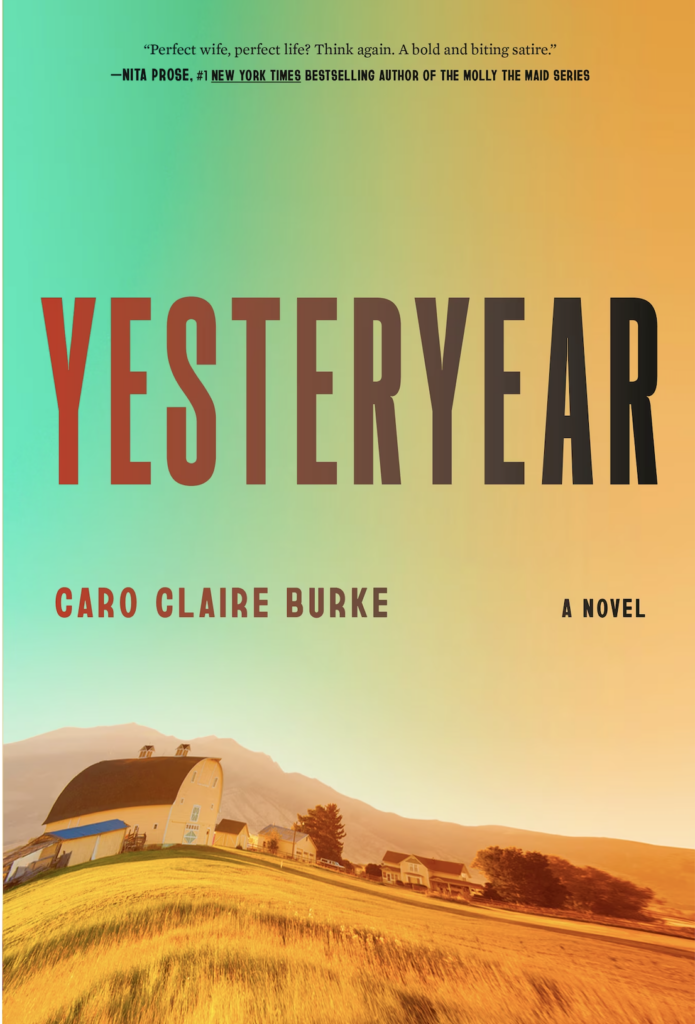
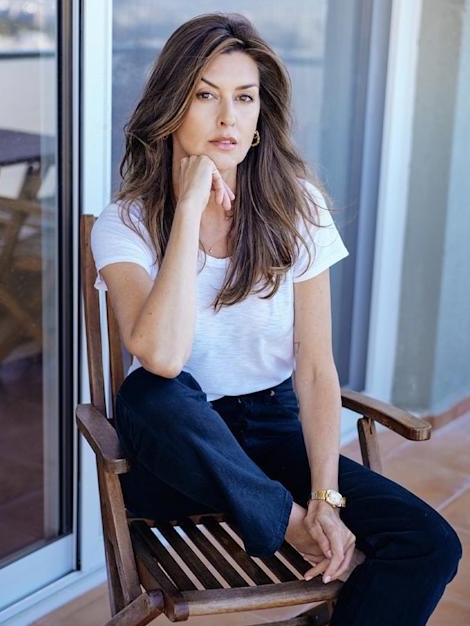
Yesteryear by Caro Clare Burke (Knopf, $30)

I start my mornings with three dailies — the New York Times, the Washington Post and the Boston Globe. All agree that Yesteryear is the book of the summer. (Or book of the summah, as the Globe might say.) That sounds like “beach read” stuff, which is one of those triggering phrases that might make you want to puke.

For the record: this isn’t your sister-in-law’s beach read. It just so happens this book was published as May rolled around and the timing throws it into the summer-book category.

Forget that noise. This is an engrossing and intriguing and constantly surprising book that has at its center a trad-wife influencer [remark on how that phrase wouldn’t exist 10 years ago] and what happens when she appears to do a Billy Pilgrim move, and becomes unstuck in time. Or does she?

With a deft touch, Burke follows the saga of the influencer’s families [note plural], giving us the chance to ponder the realities we manufacture through social media. Is it life or is it synthetic life?

Corny to say, but true: likely you will be wrapped up in this book long after you finish reading it.
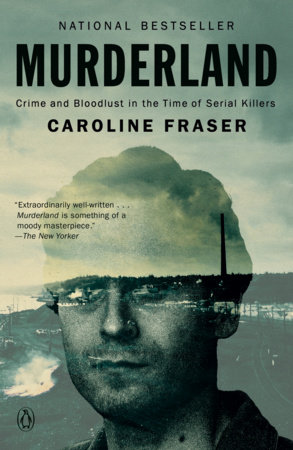
Murderland by Caroline Fraser (Penguin, $32)

This book was published last year, so it’s already out in paperback. [Cheap bastard alert!] I’d go for the hardcover, though, because you’ll carry this book wherever you go until you finish it. A paperback might not survive.

I confess: I like true-crime books (and great detective fiction, by Michael Connelly, Tana French, Michael Koryta and others) and I have read a lot about serial killers. (One of my favorite book titles of all time: Evil Serial Killers … as opposed to warm, cuddly ones?)

This book allows us to ponder the disproporiate number of serial killers from the Pacific Northwest. That’s the author’s home turf and she weaves together the various stories of the killers — Ted Bundy, the Green River Killer, the I-5 killer and others — with her own, and with the manufacturing history of the area.

She comes to the conclusion that lead poisoning from smelters burning and polluting that awful stuff warped the minds of a susceptible lot.

Interesting premise and execution. The personal story does not detract and the details of the killers and their methods will revolt you anew.
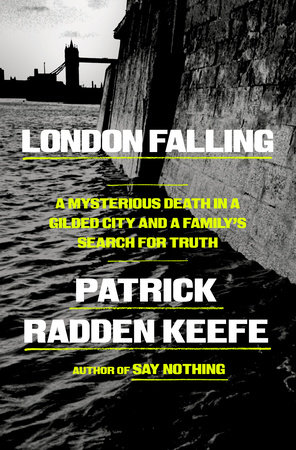
London Falling by Patrick Radden Keefe (Doubleday, $30)

I am not always in step with the rest of the world. I never finished Keefe’s book Say Nothing, a bestseller turned television series. But after reading London Falling, I need to give Say Nothing another chance.

London Falling is a terrific book. It follows a small family through crisis and tragedy, as the parents try to learn what went wrong with their second-born son.

Again, the themes of curated identity play a huge role here. There are two sons — the golden child … and the other. Unable to match his brother’s accomplishments, the younger son manufactures another identity and another life, this one steeped in London’s underworld.

Keefe, a New Yorker writer, earns the trust of the family, which gives him the ability to write the story from the inside. Even though we know doom lies ahead, as we read we want to step inside the story, to steer it right.

We realize again, after reading this harrowing book, that parenthood is not a job for chickenshits.
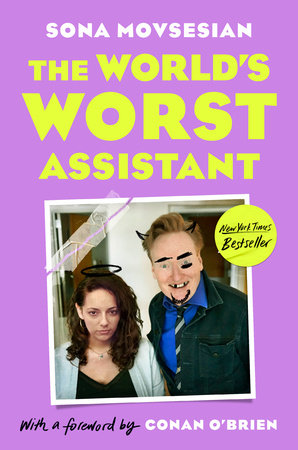
The World’s Worst Assistant by Sona Movsesian (Plume, $30)

First, accept my premise: Conan O’Brien is the funniest human on earth. I’ve always appreciated his humor, but since getting a new (to me) car that came with Sirius XM, I’m rarely off Conan O’Brien Radio. Aside from bits from his 30-plus years of late-night entertainment, it is home to all episodes of his podcast, Conan O’Brien Needs a Friend.

My corollary to the above law is that the second funniest human on earth is Conan’s assistant, Sona Movsesian. Despite the bold claim in the title of her memoir, she must not be truly the worst, since she’s been working with the Red-Headed Phantom for nearly two decades.

Her let’s-get-real personality is perfect foil to Conan’s flights of fantasy and weirdness. Their symbiotic relationship renders Needs a Friend the perfect podcast. The nice thing about it being on Conan O’Brien Radio is that there are no commercials. (Though the commercials are often quite funny when Conan performs them.)

This book is a few years old, so sue me. She has a sequel called The World’s Worst Mom, which I vow to read before frost covers the pumpkin.

This is out in paperback for all of you cheap assholes.

(The podcast is worth your time. Conan is a masterful interviewer.)
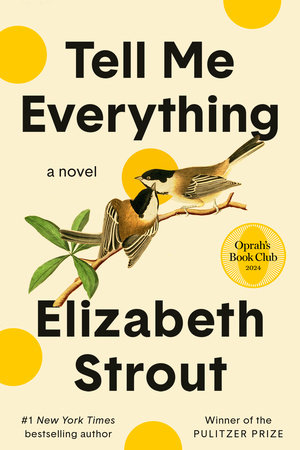
Tell Me Everything by Elizabeth Strout (Random House, $30)

William Faulkner has Yoknapatawpha County, Stephen King has Castle Rock and Elizabeth Strout has Crosby, Maine.

Once every couple years, Strout takes us back to Crosby for her rotating cast of characters — Olive Kitteridge, Lucy Barton, Bob Burgess and the town’s other denizens. These protagonists share the narrative, this time with a murder element.

Strout won the Pulitzer for Olive Kitteridge and My Name is Lucy Barton was a best-seller. This book is largely in the hands of Bob Burgess, an attorney near retirement age, happily married but wanting more.

We’re not used to murder as a regular feature of Strout’s narratives, but it’s not much of a reach here. It comes organically from these characters.

This is book about grownups for grownups. Though Strout often indulges in superfluous asides (not quite Now, Dear Reader, but close), her storytelling is swift, efficient and rich with character.
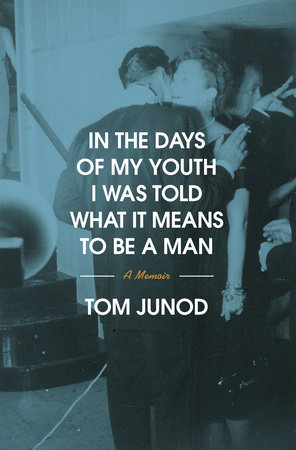
In the Days of MyYouth I Was Told What it Means to Be a Man by Tom Junod (Doubleday, $32)

Much praise has been heaped on this book, but allow me to heap some more.

Junod is a gift-from-God magazine writer whose first book is a memoir. (Let’s hope the publisher is preparing a collection of his journalism for book number two.) The title, borrowed from Led Zeppelin, is perfect. This is all about the life lessons he learned from his father, Lou Junod. Despite being an unrepentant bullshit artist, Lou is nevertheless capable of being loveable on occasion.

Tom grew up both confused and comforted by his homelife. His parents were married for 59 years, despite prolific affairs and bouts of severe unreliability. He was thr youngest in the house, the one who had to deal with parental detente the longest.

So many memoirists pull their punches, but Tom Junod writes with breathtaking honesty. I predict a Pulitzer.
Making the Leap

“What I do in writing of any character is to try to enter the mind, heart and skin of a human being who is not myself. Whether this happens to be a man or a woman, old or young, with skin black or white, the primary challenge lies in making the jump itself. It is the act of a writer’s imagination that I set most high.” EUDORA WELTY


Too true, Ms. Welty, too true.

I used to write fiction — and published several short stories — many years ago. Not sure why I gave it up except that I started publishing nonfiction and I had only one life to live. Rather than live it as a blonde, I decided to live it as a nonfiction writer.

But I know the excitement of which Ms. Welty speaks. I loved entering the “mind, heart and skin of a human being who is not myself.”

I wrote several stories in the voices of people unlike me: a woman bullied by her family into selling the trinkets and baubles of her lifetime, a barber who served in the Second World War and put off his dreams until it was too late, and a radio evangelist shredding fire and brimstone on your AM dial and rhapsodizing about finding a good roasting ear for the church barbecue.

I think that’s why I read so much. I love stepping into some else’s life for a while.

I read a lot of fiction. Our lives are short, so I feel I get more out of living by adopting these lives for the time it takes me to learn about them and hear their stories.

Here’s some commentary on three books — lives — into which I have recently leapt.

. . . . . . . . .

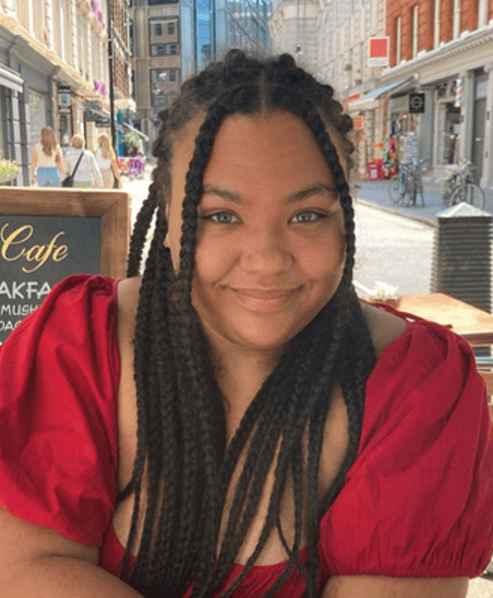
Vulture by Phoebe Greenwood (Europa Editions, $27)

Sara Byrne is a correspondent (not a full-time staffer; a contract reporter) for a London newspaper and she’s assigned to Gaza.

This isn’t 2023. This is the Gaza of 2013.

Click on the cover to order.

Byrne is good at her job. Dropped into the brutality of war, she can still compose an intelligent and accurate account of what she has seen.

But of course, that doesn’t mean she sleeps well and unaffected. When you’ve seen a child severed at the waist and trailing entrails as his father carries him to the hospital, it’s something you are cursed to remember to your deathbed.

I’ve never been a war correspondent but Greenwood tells a good, evocative story and is excellent in giving us a sense of place and drawing memorable characters.

Byrne is one of the younger journalists at the bar of The Beach Hotel in Gaza. It’s the nicest lodging around, even if its walls are freckled with shrapnel. The older reporters are irritating and condescending but Byrne holds her ground.

I wrote my thesis in graduate school about how journalists are portrayed in popular culture. I studied the first two-thirds of the 20th Century, reading a ton of novels. Some were excellent and some were mediocre.

Phoebe Greenwood

I discovered a change in the portrayal of journalists over the years. In the early years, they usually appeared as society’s guardians — not in the noble sense of protecting the free flow of information — but in withholding from audiences anything damaging to society’s heroes or to the myths that keep a nation propped up.

That changed over the decades. In later years, journalists became destroyers of those beliefs and heroes they used to preserve. All that’s good, right?

But the private lives of the journalists were consistently marred by alcoholism, infidelity and ethical breaches. Of course no one trusts the press anymore. When they see reporters portrayed as drunks who sleep with sources to get stories, no wonder they consider journalists to be purveyors of fake news.

It’s a pretty consistent portrayal across books, television and film. I’ve kept up with this stuff for decades.

So of course I was fascinated by Greenwood’s novel. It’s a great portrayal of the press and despite the blood and gore, there are moments of dark comedy. Greenwood draws her characters well — not just Byrne, but also Nasser, her fixer, and the staff of the hotel, still trying to please guests while bombs rein down.

This is is about the Hamas of years ago, and Byrne has the urge to tell her readers back home that these guys are the Keystone Kops of terrorists. Unfortunatly, we know what Hamas became and there’s nothing comic about it.

Byrne is under pressure — she’s in a war zone doing what is, in essence, a yearlong audition for a full-time staff position with her newspaper. In addition, her father has just died, her mother is losing her shit, and she’s still wrestling with the fallout from an affair with a much-older man, a pal of her father’s.

Vulture gives us a sense of time and place and heartbreaking descriptions of war visited on the civilian population. Journalists generally have to develop shells for protection from the horror and some of these exercises of humor might be too dark for those outside the tribe. Byrne suffers collateral damage to her soul.

It’s an intriguing blend of strong narrative storytelling, satire and ruminations on the physical and psychological effects of war.

I look forward to more from Phoebe Greenwood.

. . . . . . . . . . .

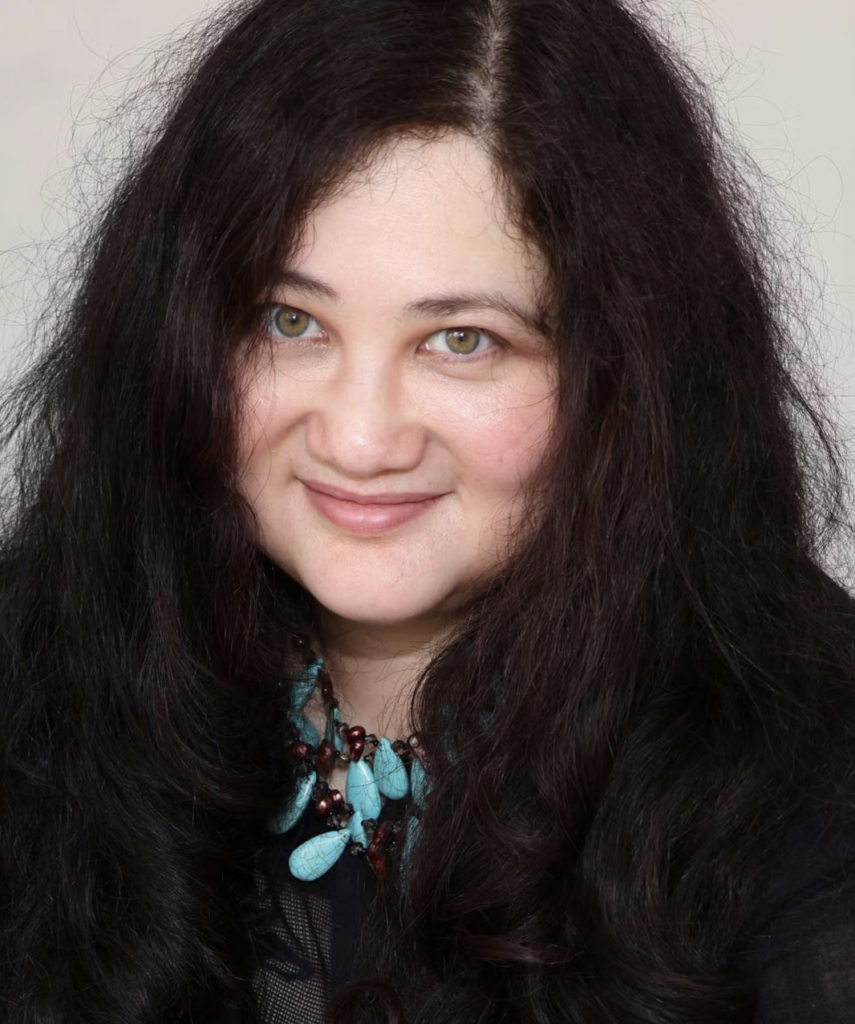
The Girls Who Grew Big by Leila Mottley (Knopf, $28)

Sometimes I’m drawn to a novel by the geography. The late Tom Corcoran’s novels took place in Key West. That place has become so expensive that it made economic sense to read one of Corcoran’s books — just plop down $24.95 — in lieu of a trip to the island. Corcoran had the ability to engage our senses of smell and taste. It was like tripping to Key West without leaving the Barcalounger.

Click on the cover to order.

So the first thing that drew me to The Girls Who Grew Big was its setting — a stretch of the Florida pandhandle, near but not part of the high-rise condominiums that have begun to tower over the once-desolate beaches.

I used to camp there a few decades back, at a place called Grayton Beach. It was at once wild and pristine. Over the years, I watched the coming of the condos and the inevitable spoilage. It was heartbreaking.

The protagonists here are single teen-age moms. Some have birthed, some are soon to birth.

Simone’s twins are four now and she becomes the spirtiual leader for these younger girls. They congregate on the beach — the Redneck Riviera part — and hang out around Simone’s red truck, her only home and the temple of support for these young, discarded girls.

Leila Mottley

There are three narrators. Simone is the group’s griot. Emory is a local girl who idolizes Adela, the new girl in town. Adela’s been exiled from Indiana by her parents who cannot deal with the shame of her pregnancy.

Adela’s pregnancy frames the story. The girls argue, fight, and commit acts that others consider betrayal. Simone basically lives in her truck and she’s wary of the social workers from the Department of Children and Families who threaten to take away her twins. Now she’s she’s pregnant again and access to reproductive care is … well, it’s a fucking mess.

The boys in their lives serve only as sperm donors. The boys fall on various spots of the responsibility continuum, mostly at the take-none end. With a few mild speed bumps, they can go on with their lives. The girls all have dreams that now will be deferred.

It’s an engrossing novel and a great example of why I love to read. I’ve stepped inside the minds of these young women as they wrestle with their intense drama.

. .. . . . . . . .

Tomorrow, and Tomorrow, and Tomorrow by Gabrielle Zevin (Knopf, $28)

This book came out three years ago, but it’s new to me. I’ve seen lots of copies of it in backpacks and on the subway, so I know it was a hit. It appeared in front of my face when I was cruising a used book store. How could I pass it up when it was a mere $2?

Click on that hideous cover to order.

I have to tell you about it, because only once or twice a year, as I go through the course of my regular reading, do I fall into a book and enjoy being smothered by the story.

I loved this book, which is about something completely alien to my life. It’s about gaming.

I am not a gamer. I could never be one because it requires hand and eye coordination. The key word is coordination and, since I am from Indiana, that it something I lack.

But this is the story of two young folks from Los Angeles who meet in tragic circumstances as mid-teens and who later end up in the same town for college (Harvard and MIT).

They begin to collaborate on making games — this takes places a couple decades back — and their circle begins to widen with roommates and friends who help with some of the nuts and bolts stuff. Two sophomores huddled together in front of aa computer screen grows into an industry leader over the years.

Gabrielle Zevin

Our protagonists, Sam and Sadie, love each other but are not in love. Don’t wait for them to hook up. Not gonna happen — and that’s not really a spoiler.

Sadie is having an affair with her professor, which is all right with Sam. He wants to use an engine designed by the prof to run the game he and Sadie have made. Later, Sadie is repulsed that her friend did not convince her to abandon the teacher earlier in life.

Sam and Sadie have a complicated, angry and loving relationship. I wanted to leap into the book and get to hang with them. That’s when you know you’ve found a good book.

There were some twists and tragedies I didn’t see coming. When you invest so much in characters as arresting as these, you feel the loss severely.

(Take a look at that book cover. I know what they were going for, but it’s hideous and not worthy of such a fine book. Don’t let it scare you away.)

. . . . . . . . .

William Faulkner said, “The best fiction is far more true than any journalism.” I practiced journalism and later taught it, so I might need to wrestle Ol’ Bill in a vat of creamed corn to settle that debate.

But I know what he meant. I think when we check out of life, we should do our best to make sure we’re better than we were when we checked in. Reading can help us develop the compassion and understanding that makes us better human beings.