When a parent dies young, the children are left with questions. There is so much we want to know.
My father died when he was 53. I had turned 20 three weeks before.
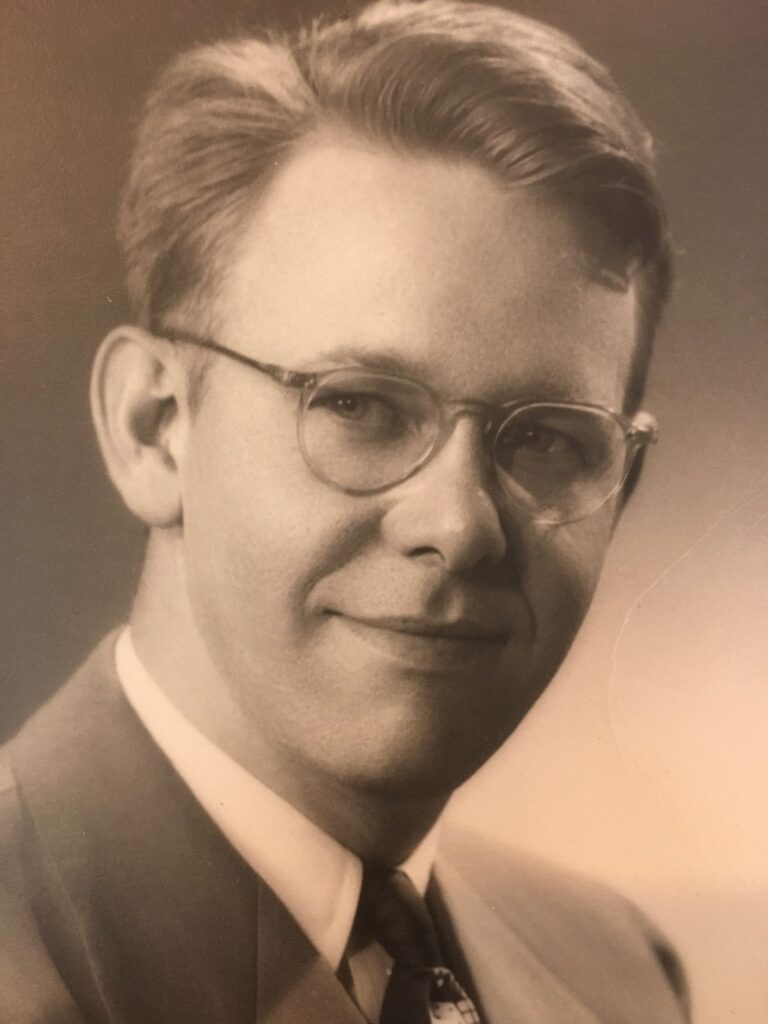
I always thought he’d be there in my life, because I saw him as indestructible. So many questions linger, unanswered.
For example: I was conceived when my father was stationed in Roswell, New Mexico. This made me wonder if I was spawned, in part, by aliens. That would explain a lot.
I was in utero when my family – mother, father, sister, brother – moved to Indianapolis, where I was born. I have always been the family oddball, so maybe I do have a little Martian in me. (My brother said that was unlikely. He liked to say I came from Uranus.)

My father was a deeply respected flight surgeon in the Air Force. My brother speculated recently that maybe we were assigned to Walker Air Force Base in Roswell so that Dad could study the body of a deceased alien. Dad was a great keeper-of-secrets, so who knows.
We like to share stories and conjecture about our father because as the years lumber on, we realize how much we want to know about both our parents.
I’m sitting in a room that contains most of my father’s library, my part of the inheritance.
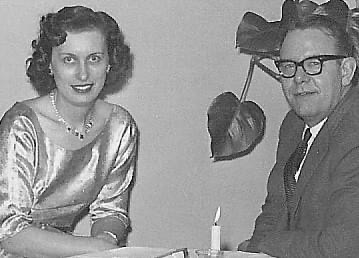
To my right is a reasonable facsimile of all the world’s literature. We have Thucydides, Aristotle, Homer, Plato, as well as the three volumes of The American Language, a four-volume history of technology and The Bible as Living Literature. And so much more.
These shelves contain a pretty good starter set for a new civilization, should we have to establish a colony on Venus someday.
Two shelves of books are bound in calfskin. I want to ask, “Why’d you do that, Dad?” Family rumor is that it was a relaxing home activity for him while he was in medical school. But no one knows for certain.
And there are other questions I wish I could ask, things that would help me understand his life’s narrative.
During the Great Depression, for example: Dad, as I understand it, you and Uncle Richard were the primary support for the family; you kept the McKeens afloat with the pay from your after-school jobs. How did you do that?
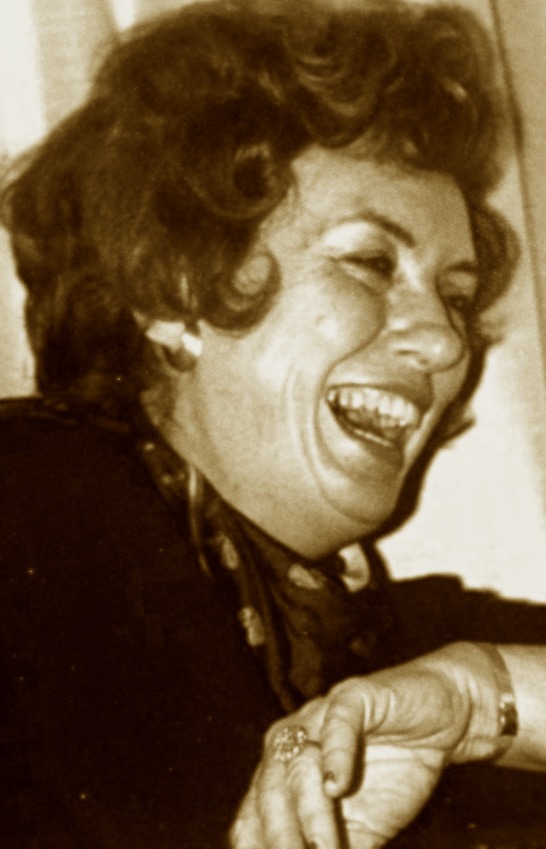
I’ll never know. My mother lived four decades after my father’s death, but I never asked her the question.
I regret not doing so.
There’s a saying stitched on a sampler in my brother’s house: “Children learn what they live.” My brother, who also became a surgeon, is quite good with his hands. He stitched a number of samplers, perhaps for the same reason my father re-bound his books: meaningful relaxation.
My sister also went into medicine, so as an academic, I am the black sheep of the family.
Children learn what they live.
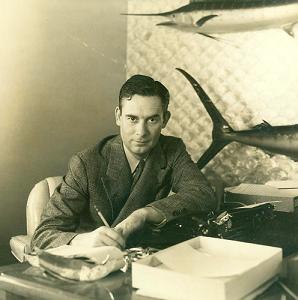
So I followed my father’s example and became a reader. He would read three or four books simultaneously. There was one for the family room, one for the bathroom, one for the bedroom. And so on.
I do that too.
When I was growing up, the rest of us might be watching television but Dad, not wanting to be anti-social, sat in the same room but would not allow the glowing box his full attention. There always was a book on his lap.
A key moment in my life as a reader came when I met my first writer.
If memory serves, it was a Thursday night in the autumn of 1962. That summer, my father had been transferred to Homestead Air Force Base in Florida, where he was chief surgeon and hospital commander.
The Air Force base was adjacent to the second-to-last town on the mainland before hitting the Keys. (Ah, all those weekends fishing in the Keys. I never caught anything, but Dad did. He also caught a record bonefish in Biscayne Bay.)
My father was on call that Thursday night, but my mother had read an item in that morning’s Miami Herald about a book event. So Mom trundled us in the candy-apple-red Cadillac convertible and drove us up to Coral Gables to meet Philip Wylie.
I was 8. I had no idea who this man was, he with the craggy face and omnipresent cigarette. Wylie seems largely forgotten today, which is unfortunate. He was an extremely versatile writer, producing books of essays, including jeremiads about the impending rape of the planet due to lack of ecological concern. He wrote mysteries, screenplays, fishing stories and novels about the looming end of humanity because of our greed, vanity and selfishness. Ahead of his time, a bit.

My mother was also a reader and a fan of Wylie’s books. The Disappearance, published in 1951, was his dystopian work about a ripple in the cosmos that created separate worlds for men and women. It was science fiction mixed with social commentary. In many ways, Wylie was dystopian before dystopian became cool (and then a cliché).
Wylie was at the store for a book signing, but the turnout was small. He was still a successful writer. His novel, Triumph – about the aftermath of nuclear war – was serialized in The Saturday Evening Post – but on this Thursday night in the Miami suburbs, the expected crowd stayed away.
(By the way: I still recall the disturbing illustration in the Post that accompanied Wylie’s serialization. It showed a bombed out Washington, with the Lincoln Memorial turned to rubble. Honest Abe’s decapitated head loomed in the foreground. This didn’t help me sleep at night, because I was terrified of nuclear war and expected at any minute to be vaporized by some uber-bomb dropped by the Russians.)
Wylie didn’t seem to care about the small audience. My mother charmed him and as she spoke, he came alive when he heard her talk about his books. She spoke with deep knowledge and he knew he was in the presence of a real reader. He said something to that effect and she said, “You should meet my husband.”
And so he asked to meet my father. When he had an evening free, Dad went to the bookstore to rendezvous with Wylie. I was not there, but I wish I could have observed that conversation of titans.
I learned a lot of interesting stuff about Wylie in the years since meeting him. Here’s a small sampling of his contributions and accomplishments, borrowed from Wikipedia:
- His book Gladiator (1930) is considered one of the key inspirations for Superman.
- His science fiction novel When Worlds Collide (1933) – about an extinction-level event – inspired the character Flash Gordon.
- The Disappearance is considered essential reading for those studying human-rights movements by women and homosexuals.
- He was an avid cultivator of orchids and his writing on the subject inspired a generation of gardeners.
- He was a strong voice against segregation and scolded the all-white student body during a commencement speech at Florida State University.
- Beginning in the 1950s, he raised alarms about pollution and climate change. He wrote about it in essays as well as in fiction.
- His niece, Janice Wylie, was murdered – along with her roommate Emily Hoffert — in 1963, a high-profile case that eventually inspired a television film that introduced the world to the Tootsie-roll Pop-sucking detective named Kojak.
- He wrote scores of screenplays, including a set-in-the-future episode of The Name of the Game called “L.A., 2017,” directed by 24-year-old Steven Spielberg.
The list could well go on.
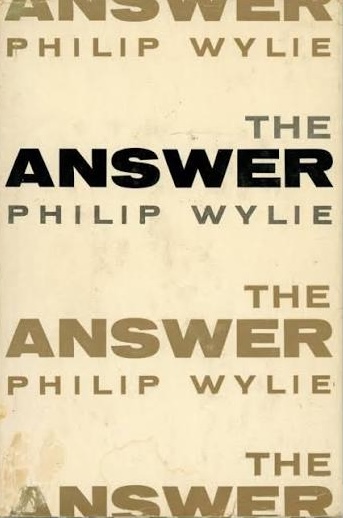
Back to that night in Coral Gables. My mother bought some books for my father and had Wylie sign them. For my brother, she bought When Worlds Collide and for us to share, she bought The Answer, Wylie’s novel about an unidentified flying object shot down by the Air Force. The “object” turns out to be an angel.
He signed that, “To Chuck and Bill – pals of mine.”
I was starstruck. When he shook hands with me as we were leaving, I held up my palm and said, “I’ll never wash this hand again.” Wylie laughed.
Alas, my Dad lent our copy of The Answer to one of his fellow surgeons after our transfer to Texas in 1965. We never saw that book again. (This is why I rarely lend books – and then, only when the prospective borrower delivers a urine specimen, the title to their car and dibs on their first-born.)

I never thought I looked like my father. Looking-like-father would seem to describe my brother.
I’ve now lived nearly a quarter-century longer than my father, and in recent years, I’ve begun seeing him in the mirror.
Wouldn’t it be wonderful, I think, if that was him in the mirror and then I could finally ask all of my questions.
But it’s only me who looks back, some gray-haired old man. My father didn’t live long enough to turn gray.
I’m not a surgeon, but I don’t think my parents cared that I didn’t want a career in medicine. They were both readers, and my father had extremely catholic tastes: he’d read a Raymond Chandler novel, then devour a philosophical treatise, then return again to Finnegans Wake, sometimes reciting passages aloud. (He was a huge fan of James Joyce. I never got past Dubliners.)
When he died and I was a 20-year-old work in progress, I began to wonder what he would think of me. My Mother spent the last decades of her life assuring self-doubting me that he would be proud of me, and the fact that I became, among other things, a writer. He would be proud of all of us, she said.
When my brother and sister and I became parents, our joy was tempered with a wish that could not be fulfilled: I wish Dad could be here to meet my child.
(By the way, I won the spawning competition: brother Charlie had five children, sister Suzanne had two, but I had seven.)
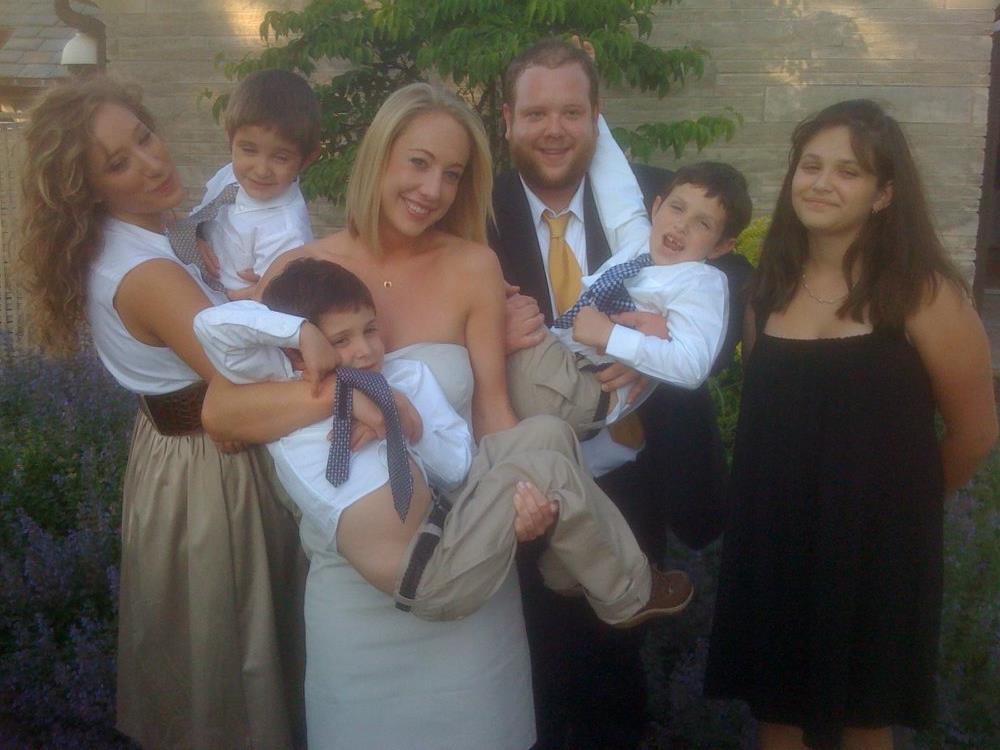
Our children wondered the same thing. None of my children knew my father. One of my sons, Jackson, would ask me for stories about Dad. He even devised the nickname DD for him – Dad’s Dad.
Dad would have been proud of them as well.
On his birthday one year, I gave compact discs to my brother, sister and mother. I’d made these discs and presented them in jewel cases festooned with pictures of him – with Mom and his children.
There were two volumes of Dad’s Music. The first disc was his favorite classical music, the second disc was popular music. It was not hard to listen to that music and feel his breath at our sides. This was the man who used to wake us at 6 o’clock in the morning with The Flying Dutchman overture rattling our glands with his prized Bozak speakers. He loved music.
My eldest, a girlchild named Sarah, heard Dad’s Music at my brother’s house one night and said, “I wish I would have known him.”
I said, “Me too. You would have loved him and he would have loved you.”
What I should have said.: You do know him; he is in me.