
The Sinking City
I was thinking about doing a book of stories about Boston and how it has reinvented and redefined itself in the last three decades. I was going to focus on Mayor Michelle Wu and her efforts to keep the city alive and save it from watery death, due to sea-level rise. If this sounds like a weird proposal coming from me, maybe it is. But I looked forward to the reporting and research. Alas, no publisher found this to be of sufficient interest to offer me a room-clearing advance. Oh well.
At least there’s this, which was fun to do.
. . . . . . . . . .
Copyright © 2026 William McKeen
Attention, fellow citizens. If you contemplate visiting Boston, open the Marco Polo Guide to page 35. Take note of the advice under the heading of Driving: “Don’t even attempt to drive in Boston.” Should you insist on having a car, the guide offers further advice, highlighted in yellow, which means pay attention, you weasel: “If you have a car,” the guide says, “by far the best option is to park it in a garage when you arrive and keep it there until you leave.” So if you want, go ahead and rent a car at the airport, pal, but you’d better leave it there.
Politics and crime: they are the same thing.
MARIO PUZO & FRANCIS FORD COPPOLA, THE GODFATHER, PART III
The old men gathered in secret. They came from the elite institutions of banking, real estate, commerce and education, and they all thought they knew best for Boston, the city they had in common. It was 1959 and Boston was teetering on the brink of bankruptcy. Phone calls. Notes carried by messengers. Word quietly passed between the select few.
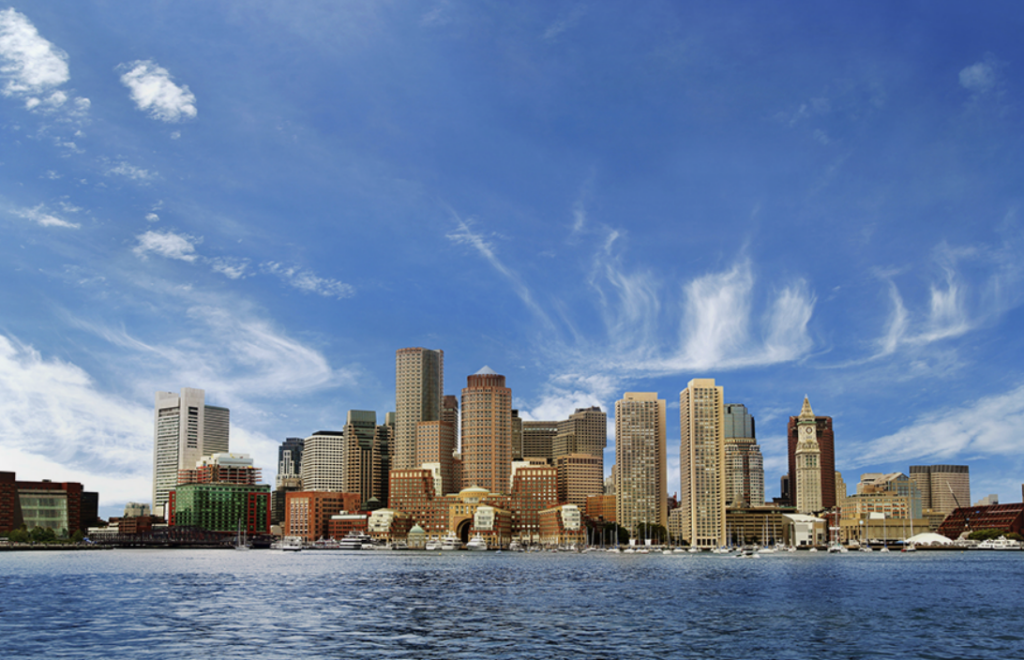
The meeting times varied and were secret. They came together out of the public eye. They knew what was best for the city and they knew that if they bound together they could influence the direction of the future, and tell the mayors, no matter which candidate was elected, what to do.
They met in the offices of Ralph Lowell, one of the men who appointed this self- appointed committee. Lowell was chairman of the board of the Boston Safe Deposit and Trust Co., and there was a boardroom outside one of the huge vaults in the company’s offices. It was away from the office foot traffic and the group could gather in a conference room that kept them from being observed. They were nothing if not discreet.
They were 14 men, all white, from the city’s most vital institutions: department store Jordan Marsh, the Bank of Boston, Blue Cross Blue Shield, insurance giant John Hancock, and other stalwart businesses and institutions.

When it eventually came time for the group to have a name, the members decided on the Boston Coordinating Committee. It was easy, at the start, to keep out of the public eye. They didn’t want scrutiny or acclaim. They just wanted the power to determine the city’s direction. As the nation moved toward racial integration, having been ordered to do so by the courts, the white men who met at the vault were like salmon against the stream, finding ways to maintain de facto segregation.
When they met, they’d come to a consensus, then whisper instructions into the ears of the mayor and the governor. The group credited itself with helping avoid the bankruptcy that seemed so likely in 1959. They went on to advise four mayors over forty years, all done with whispers.
Word got out about the secret group and the gab spread. Because it was rumored that the group met in an actual bank vault, the group became known as the Vault.
Over the course of its influence, the Vault navigated some crises and unwittingly caused others, most notably the city’s savage and bitter school busing catastrophe in the 1970s. By then, things had begun to change for the 14 old men of the Vault. Businesses evolved. Stores and banks were bought and merged, and the power once held within the city was lost to corporate headquarters half a continent away.
By the 1990s, the last vestige of this group of power brokers stepped back from its advisory role and drifted deeper into retirement to watch what happened to the city they all loved. Other generations were coming along.
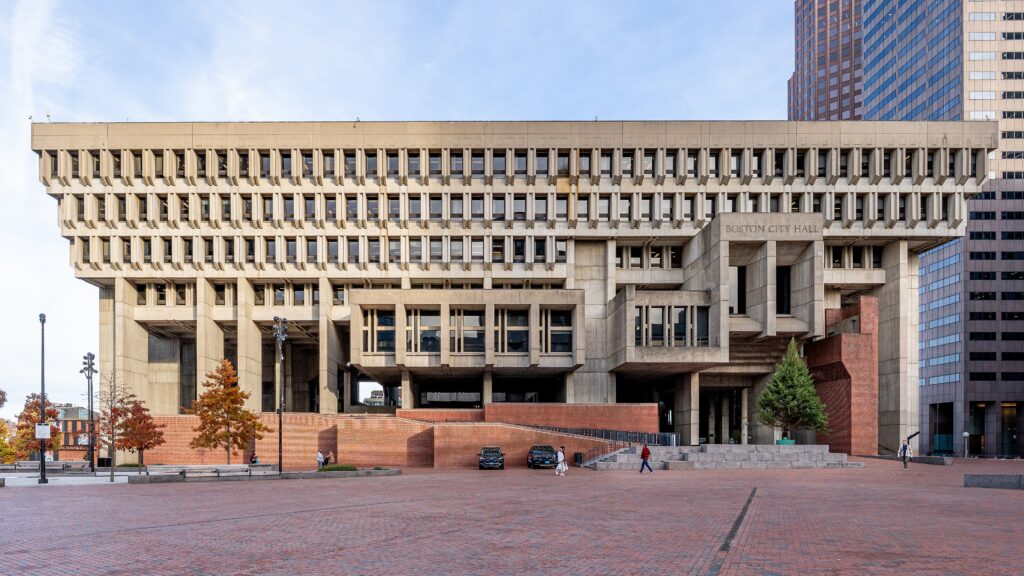
Boston City Hall is one of the most hideous buildings in the United States; nay, on the earth. Officially the Boston Government Services Center, it is a good example of bad architecture, brutalist to its wretched core. Squat and grotesque, an unwitting tribute to all of the ugliness of the 20th Century, it houses the government of one of America’s oldest cities.
It’s there, well over a half century since the Vault held its quiet, massive power, that Michelle Wu shows up for work each morning.
She’s the daughter of Taiwanese immigrants, a mother of two, and first in a number of different categories: first woman to serve as Boston’s mayor, first person of color to serve as mayor and, at 36, the youngest person elected to the office in nearly a century.
She governs a vital American city fecund with charm, a rich metropolitan personality and prolific problems. No Vault whispers in Wu’s ear and she is content to instead try to solve the city’s numerous crises and its looming environmental catastrophe with her inclusive style, which brings together advisers, experts and residents in a multi-cultural mural of inclusivity.
Whatever the heritage of problems created by the ostriches in the Vault — and many of the city’s problem were the result of avoidance — then this woman who back in bank-vault days would not have been allowed anywhere near the movers and shakers, would handle them with a rich, diverse and vibrant cast of characters.

With the federal government moving in pinball-like extremes — one administration going this direction, the next administration another — Wu believes the cities and states have to find their own path.
In Spring 2024, Wu was invited to Vatican City to give her first international address. The Vatican conference on climate change was widely advertised, but Wu was the only American mayor to attend. With Boston a city in most dire risk, it made sense that she show up.
Her talk was serious, pleading at times, and relied on some of the we’re-all-in- this-together rhetoric that got her elected. She was nothing if not engaging. With two Harvard degrees, she fluently discussed public policy, but she was even better at produce-aisle chats with constituents, working the mom thing.
It’s safe to say most of those in the Vatican audience had not lived through the particularly misery of a Boston winter, yet she first engaged the crowd on that level.
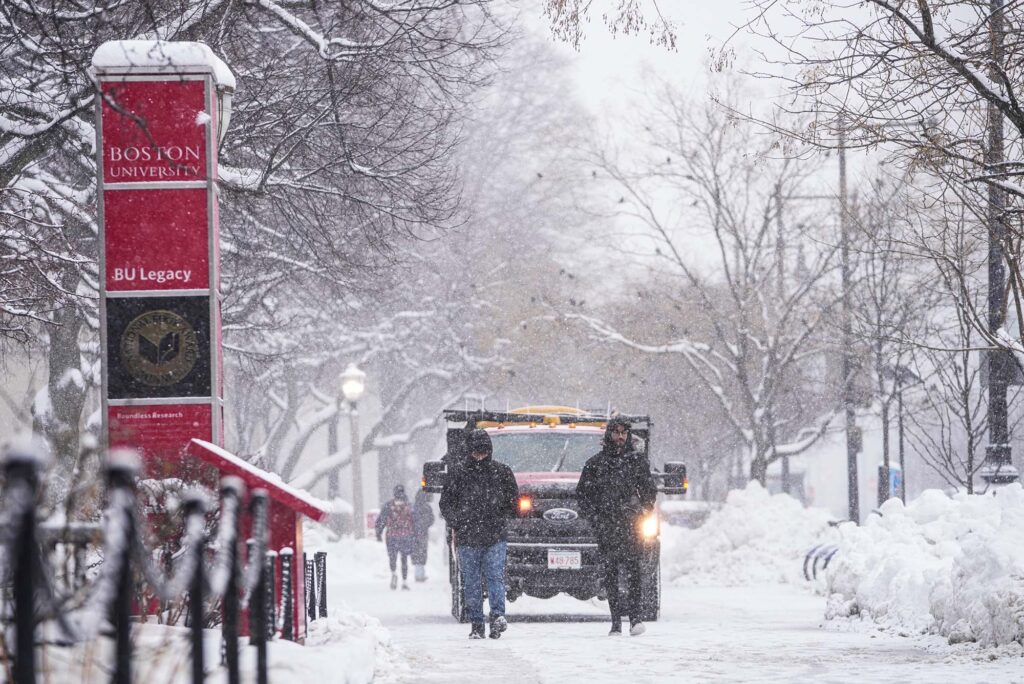
The last couple of winters were so mild, she said, that she didn’t have the need to buy new boots for her sons. Sure, it was nice not to shovel snow or dig out cars, but there was something wrong with that.
Wu said she was “a mother who doesn’t want to have had her last snow day ever with her kids. [I’m] a mom who wants her kids to know how beautiful the Charles [River] is frozen over on a clear December night.”
The trip wasn’t just about speech-making, though she did that well. She got to spend quality time with Rome Mayor Roberto Gualtieri, and they bonded over issues such as energy sources and public transpiration. No matter how bad the traffic in Boston, Wu noted, it could not compete with the spectral fury of driving in Rome.
She also couldn’t help but notice the difference in working environments.
Whereas Boston’s city hall looked bricks shat from the clouds, Rome’s Palazzo Senatorio is old enough to have been renovated by Michelangelo in the 16th century. It was elegant in the extreme.
Wu found acres of common ground with her Rome counterpart. “The actions we take set the tone for other municipalities as to what is possible,” Gualtieri told her.
As she reflected on her visit on the long flight back to Boston, Wu knew Mayor Gualtieri was right. Boston was in danger, but if the city responded well (and quickly) to its crises — climate and otherwise — then other cities and towns could learn from the example.
It was imperative to Mayor Wu that Boston respond effectively. Others would study it and learn from Boston’s example. It was, after all, what the Puritans had called “that shining city on a hill.”
Ah, Boston, city rich in history and character — act now or forever be fucked.
This grand and colorful American city is in trouble. It faces menacing challenges, assuming it wants to continue to exist.
Number one on the city’s to-do list is dealing with the threat of sea level rise. As a coastal city, it has always been vulnerable to the fickle ocean. But with accelerating climate change exacerbating the problem, the stakes are higher.
And did we mention that Boston is sinking?
These two catastrophes — the rising and the sinking — are racing to meet at the corner of disaster and tragedy.
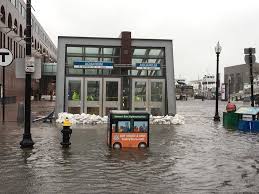
Sea level rise is caused by the melting of the polar ice caps. The warming of seawater forces it to expand, due to rising temperatures. In Boston, this means that low- lying areas are at risk of going under. The consequences are devastating.
Infrastructure will be destroyed or damaged and communities displaced, threatening the region’s vibrant economy.
But sea level rise is not the only dire threat. Boston is also tussling with subsidence, the word coined to describe the submergence of the land. This sinking feeling comes from a combination of factors, including the natural settling of the earth’s crust and the extraction of groundwater. As the land sinks, it exacerbates the effects of sea level rise, further increasing the risk of flooding and erosion.
This is not a problem in Denver or Indianapolis. Then again, those cities weren’t given the raw materials that Boston got.
When it was being settled in the 1600s, the village of Boston was a crooked finger reaching into a complex harbor in which adjuncts of land stuck like toes into the water.
Look at a map: the city is a collection of these digits of land. Then, two centuries after its founding, Boston decided to fill in part of the bay. This landfill, ironically became the highest-priced real estate in town.
Now Back Bay, that man-made neighborhood, faces a return to its former condition. The sinking of the city poses a unique challenge because it means that even if measures are taken to mitigate sea level rise, the land itself is still sinking. This requires a multi-faceted approach that addresses both the causes and effects of the sinking. In the meantime, those fine old Back Bay homes may sink back into the muck from whence the neighborhood came.
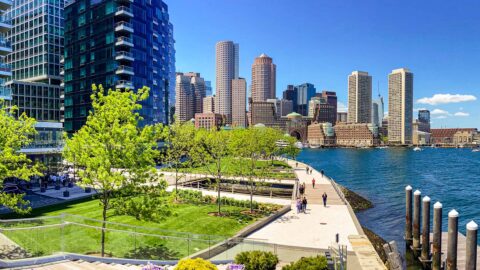
To tackle these problems, Boston has been implementing various adaptationstrategies. These include the construction of sea walls and barriers to protect vulnerable areas, the elevation of buildings and infrastructure, and the implementation of environmentally friendly “green” solutions to absorb and manage excess water.
But these efforts aren’t foolproof. They require patience and monitoring and adjustment. The challenges posed by sea level rise and the sinking of the city are complex. A comprehensive and collaborative effort from government, businesses, and the community is in acute need.
In the face of this guano heap of challenge, Mayor Wu hopes to draw upon Boston’s resilient spirit — depending on how much resilience is left — and the innovative group mindset she is trying to build among the city’s business muckety- mucks. Somehow, she knows, they must find sustainable solutions.
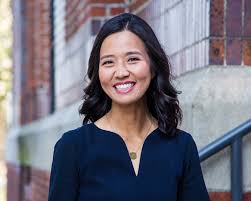
Mayor Wu makes a lot of business leaders nervous. The other guys, the previous mayors, didn’t ask pesky questions or make demands on their time or want changes in the way they did business. This mayor was different.
Boston has a long history of overcoming adversity, but it’s never faced such a foe of nature before. But battling back requires organization and convincing data that allows all factions to agree on the need to act. And so getting anyone to agree on anything in an era of pervasive and pernicious division is mission just-about-impossible.
The city’s official messaging is upbeat: Boston can protect its people, preserve its cultural heritage, and continue to thrive in the face of a changing climate. This presumes, of course, that the city gets its shit together.
Boston has been doing its best to be proactive in implementing adaptation strategies to address sea level rise and land subsidence. The city hopes to put into practice include these seven tent poles:
Building Sea Walls and Barriers: The city has constructed sea walls and barriers along its coastline to protect vulnerable areas from storm surges andrising tides. These structures act as a physical barrier, reducing the risk of flooding and erosion.
Elevating Buildings and Infrastructure: To protect against sea level rise and land subsidence, Boston has been elevating buildings and critical infrastructure such as roads and utilities. This helps to keep them above the projected water levels of the mid-21st Century and minimize the impact of flooding.
Green Infrastructure Solutions: Boston has been implementing environmental friendly — “green” — infrastructure solutions to manage excess water and reduce the strain on the city’s drainage system. These solutions include the creation of green spaces, rain gardens, and permeable pavements that can absorb and filter stormwater. Here’s something that serves as a good example:
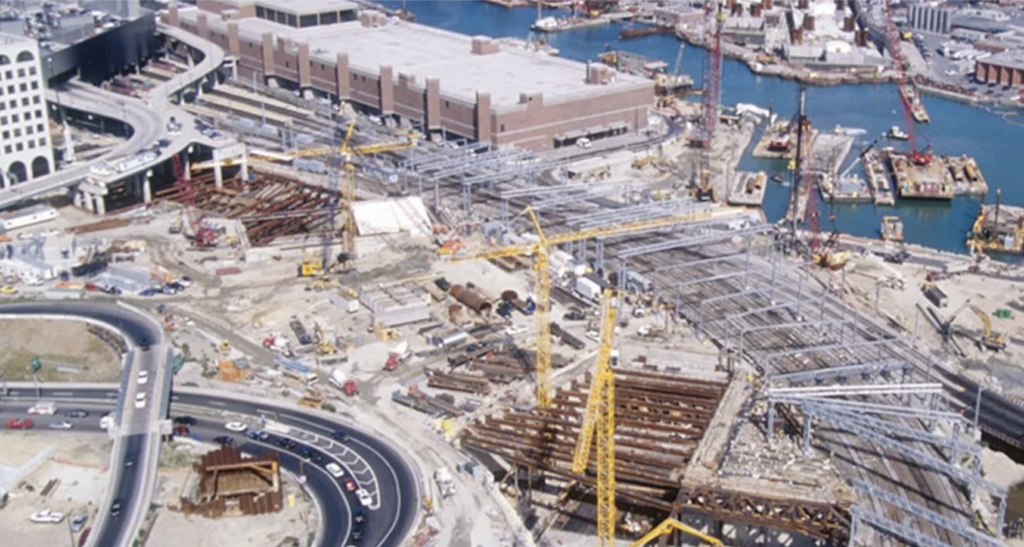
The former surface-level Interstate 93 was buried as a tunnel was constructed as part of the Big Dig. The Rose Kennedy Greenway replaced the place of the former elevated highway with its concrete pillars and collection of garbage trapped under the bridges. In its place, the Kennedy Greenway has become a showpiece and forms the heart of the social life along the harbor shore.
Urban Planning and Zoning Regulations: The city updated its urban planning and zoning regulations to incorporate climate change considerations. This includes setting stricter building codes and design standards to ensure that new developments can withstand the impacts of sea level rise and land subsidence.
Flood Resilience Programs: Boston has established flood resilience programs that provide resources and assistance to property owners in flood-prone areas.
These programs offer guidance on floodproofing measures, such as installing flood barriers or elevating utilities.
Community Engagement and Education: Boston has been actively engaging with the community to raise awareness about the risks of sea level rise and land subsidence. Public education campaigns, workshops, and community forums are conducted to inform residents and encourage their participation in adaptation efforts.
Collaborative Partnerships: The city of Boston has formed partnerships with academic institutions, research organizations, and other cities facing similar challenges to exchange knowledge and expertise. This collaborative approach helps in developing innovative solutions and sharing best practices.
These strategies demonstrate Boston’s commitment to staring down environmental change.
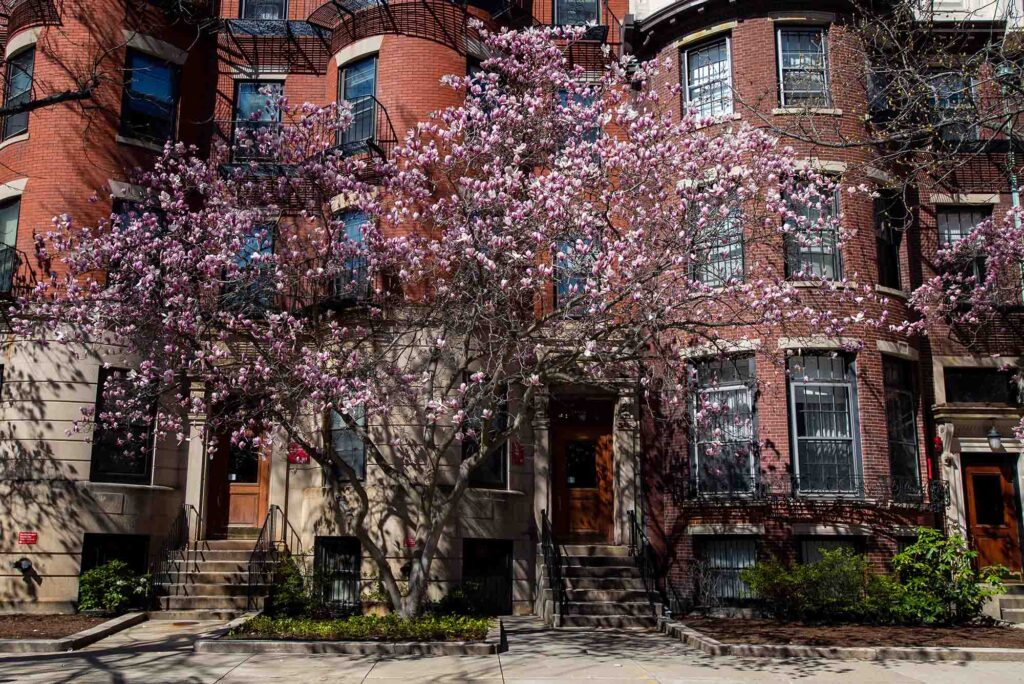
For the most part, Boston is a beautiful city. Using Mayor Wu’s holistic and proactive approach, the city aims to build resilience and aesthetics into its infrastructure, economy, and communities from the impacts of a changing climate.
One of the city’s first efforts was to find green solutions to address environmental threats, including:
• Rain Gardens: These are shallow depressions planted with native vegetationthat capture and absorb stormwater runoff. Boston has installed rain gardens in various locations, including parks, streetscapes, and schools. These gardens help reduce the amount of water entering the drainage system, alleviate flooding, and improve water quality by filtering pollutants.
• Permeable Pavement: This is pavement that allows water to infiltrate its surface and into the ground below. Boston has used permeable pavement in sidewalks, parking lots, and other paved areas. By allowing water to infiltrate, permeable pavement reduces stormwater runoff, helps recharge groundwater, and minimizes the strain on the city’s drainage infrastructure.
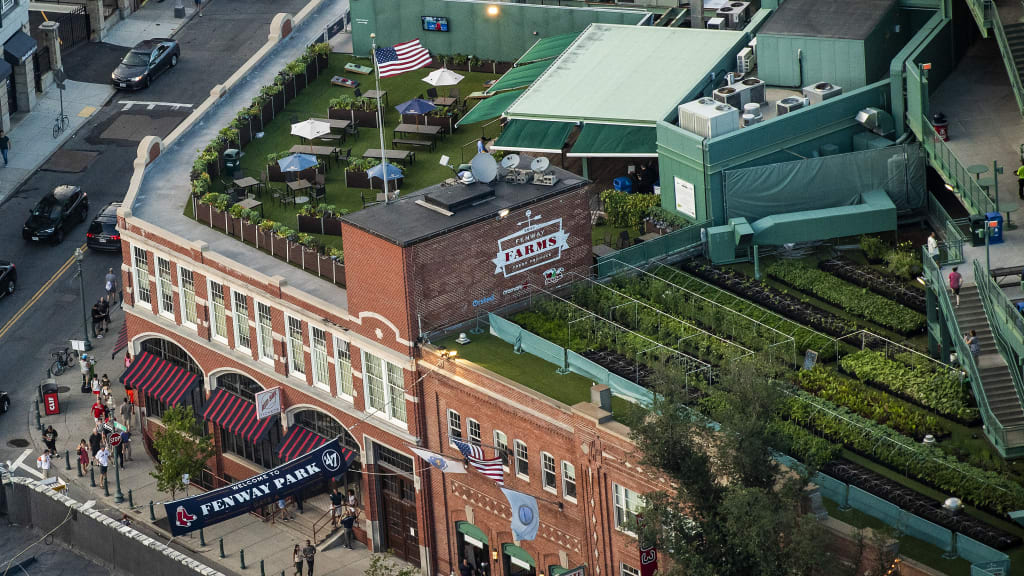
• Green Roofs: These are vegetated roof systems that provide both environmental and societal benefits. Boston has encouraged the installation of green roofs on buildings across the city. These roofs help to reduce stormwater runoff by absorbing rainwater, provide insulation to buildings, mitigate the urban heat island effect, and create habitat for birds and insects. Beloved Fenway Park has a garden on its roof that helps stoke the over-priced concessions.
• Bioswales: These are landscape features that manage stormwater runoff by collecting and filtering water through vegetation and engineered soils. Boston has incorporated bioswales into streetscapes and parking areas. These features capture and treat stormwater, reducing the burden on the city’s drainage system and improving water quality.
• Coastal Wetland Restoration: Boston has focused on restoring and enhancing coastal wetlands as a natural defense against sea level rise and storm surges. Wetlands act as natural buffers, absorbing floodwaters and reducing wave energy. By restoring and protecting these valuable ecosystems, Boston can increase resilience to coastal flooding and erosion.
• Tree Planting: This is a no-brainer and a critical part of the city’s green infrastructure approach. Trees help mitigate the impacts of sea level rise and land subsidence by intercepting rainfall, reducing stormwater runoff, and providing shade to mitigate urban heat island effects. They also improve air quality, enhance biodiversity, and contribute to the overall aesthetics of the city.
These examples show Boston’s commitment to incorporating nature-based solutions for its prolific problems. By integrating green infrastructure solutions, the city aims to not only address sea level rise and land subsidence, but also to create a more sustainable and resilient city.
In 1630, a group of Puritan settlers led by John Winthrop arrived in Boston and established the Massachusetts Bay Colony. The plan was to create a religiously and socially conservative society based on their interpretation of Christianity. This Puritan settlement laid the foundation for the city’s early development and cultural identity.
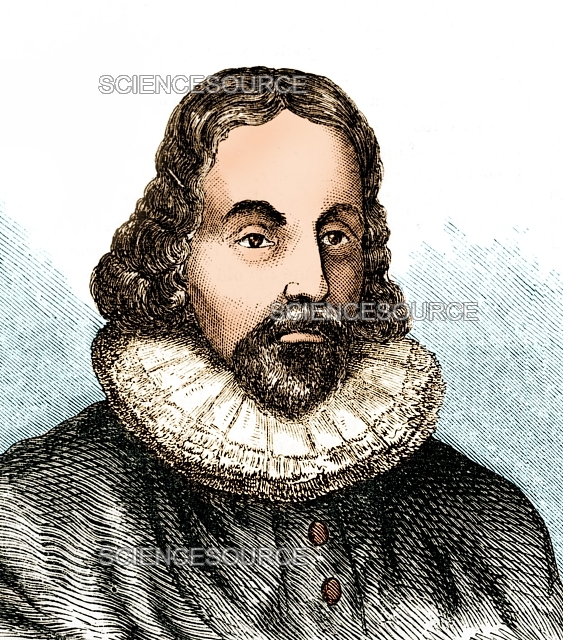
In that decade, a large influx of English Puritans arrived in the fledgling village, seeking religious freedom and economic opportunities. This migration brought thousands to the region, fueling the growth of the city and surrounding areas. The agricultural life create cow trails. These were later paved and are still with us today, accounting for daily gridlock.
The Puritan settlers wanted a society based on their strict interpretation of Christianity. Their commitment to their religious principles and moral values influenced the governance, laws, and social norms of early Boston and established a sense of intolerance for those unlike them. This shaped the city’s identity. The Puritans built homes, established institutions, and developed a self-sufficient economy.
Puritans believed that men should be able to read and interpret the Bible. As a result, Boston became a center of learning and intellectual pursuit, and education for men was highly valued; for women, not so much.
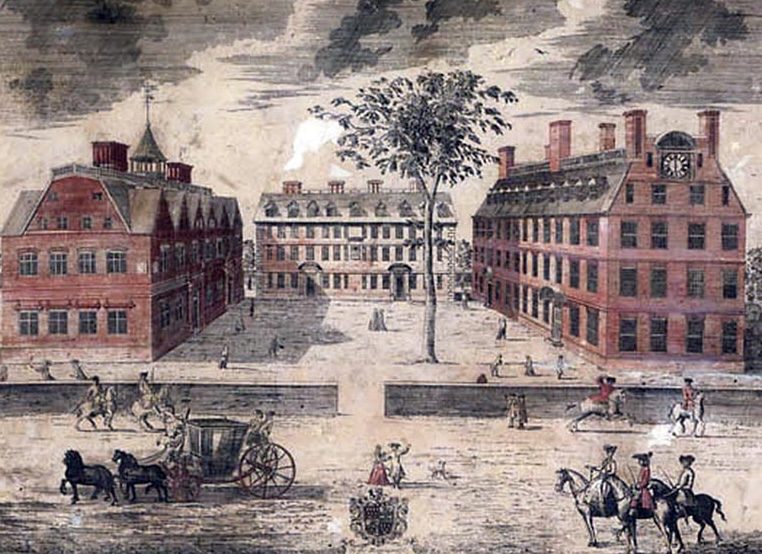
In 1636, Harvard College was founded in Cambridge, just across the Charles River (essentially part of Boston, though the Cambridge cognoscenti argue). It was the first institution of higher education in North America and played a crucial role in shaping the intellectual and cultural landscape of Boston. Over the centuries, the presence of Harvard College attracted scholars, intellectuals, religious leaders and trust- fund babies to the area, contributing to its educational and intellectual growth and a rise in snobbery.
Within Boston’s first decade, its police department and Boston Latin School were founded. Both are still with us.
Michelle Wu’s children attend Boston Latin, the first public school in what would become the United States, providing education to boys (and girls, but not until 1972), playing a crucial role in fostering literacy and intellectual development in the city.
Although Puritans primarily wanted religious freedom, they also valued money. Boston’s proximity to the coast and its natural harbor made it an ideal location for trade and commerce. The Puritan settlers engaged in fishing, shipbuilding, and trade, which led to the development of a thriving economy in the region.
There was an attempt at urban planning, streets maps to the contrary. Though they could not control the cow paths that were turning into thoroughfares, the Puritan planners tried to impose order and discipline on the evolving city. They laid out the city with straight and narrow streets and public squares. Alas, it didn’t stick. A straight street is therefore an aberration in modern Boston.
Boston was like other cities when it came to who-got-there-first. The old families were the key people when it came to controlling urban destiny. Often the case elsewhere,
Boston formed a model of the old guard that dictated the day-to-day decisions for the city, sometimes to the point that resistance to change meant poor decisions were made that had serious consequences for Boston’s environment.
It’s hard to pinpoint an exact date or moment when the civic arrogance began in Boston, or any specific location where it took root, but it’s worth noting that Boston is a primo example of social hierarchies and class divisions.
Nearly from its settlement, Boston has a history of social stratification and class distinctions, these divisions traced from the Puritans and influenced by factors such as wealth, education, occupation, and social status. As the city developed and grew, so did the complexities of its social structure.
Snobbery is not a universally pervasive trait, but it has been present in varying degrees within certain segments of Boston’s population throughout its history.
Boston snobbery is a complex social phenomenon that has evolved but never disappeared.
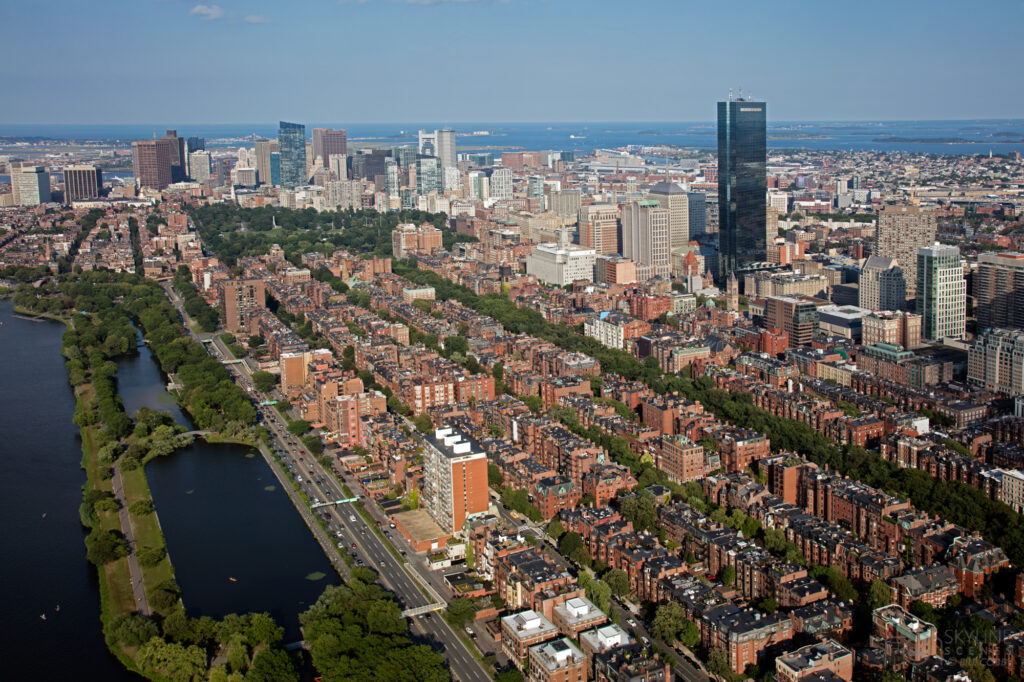
Boston’s Back Bay neighborhood was not built on naturally occurring land, but rather a result of a massive reclamation project that took place in the mid-19th century. The motivation for creating Back Bay can be traced from convergence of a growing population and limited space. As Boston became more industrialized and prosperous, there was a need for additional land to accommodate the people and the demands of urban development. The city leaders decided to fill in a vast expanse of tidal marshes and mudflats located west of the original Boston peninsula.
It took a complex engineering process to create Back Bay. This meant dredging and filling the area with millions of cubic yards of soil and gravel to raise the ground level. A series of tidal gates and drainage systems were constructed to manage the water levels.
By the late 19th Century, Back Bay was a highly desirable neighborhood. The area attracted Boston’s upper class, who built luxurious Victorian mansions along grand Commonwealth Avenue and other streets. The neighborhood became known for its elegant architecture, wide tree-lined streets, and spacious parks, such as the popular Public Garden, which abutted the two-century-old Boston Common.
Over the years, Back Bay evolved into a vibrant and diverse neighborhood. It has seen changes in its demographics, and is now a mixture of residential, commercial, and institutional buildings. The neighborhood is home to iconic landmarks like the Prudential Tower and the John Hancock building (despite the fact that John Hancock Insurance has moved out of its namesake building).
Back Bay today is considered one of Boston’s most cherished neighborhoods, blending historical charm with modern amenities. Its rich history, architectural beauty, and central location make it a popular place of residence for the clerisy of Boston.
The men in the vault lived in Back Bay. Michelle Wu did not. Mayor Wu, like a lot of people in Boston, doesn’t really live in Boston. Or maybe she does.
When someone says they are from Boston, press them a little harder and it turns out they get their mail in Newton or Charlestown or maybe Roslindale, where Mayor Wu bunks with her family. It’s all part of the same thing, unless it’s Election Day. Then, voters learn the “city” is really a collection of neighborhoods and smaller towns. The city itself is relatively small.
Boston has a cultural footprint that far outstrips its population. At 687,000, it’s at No. 23 on the list of largest American cities. Much larger burgs up the list don’t have what Boston has: four professional sports teams (five, if you count soccer). charm and history and a firm place in American culture.
Wrap all the suburbs together with the city ,and Greater Boston’s population in the 2020 census is 4,941,632. Sometimes, it seems that all those people are on I-93 at the same time.
To a visitor, it’s not immediately obvious what’s really part of the city and what is not. Outsiders think of Cambridge and Boston as one, but don’t mention that to a citizen of the People’s Republic of Cambridge. Sometimes, suburban dwellers are confused. It’s easier just to tell people you’re from Boston rather than explain where Hingham or Winchester is.
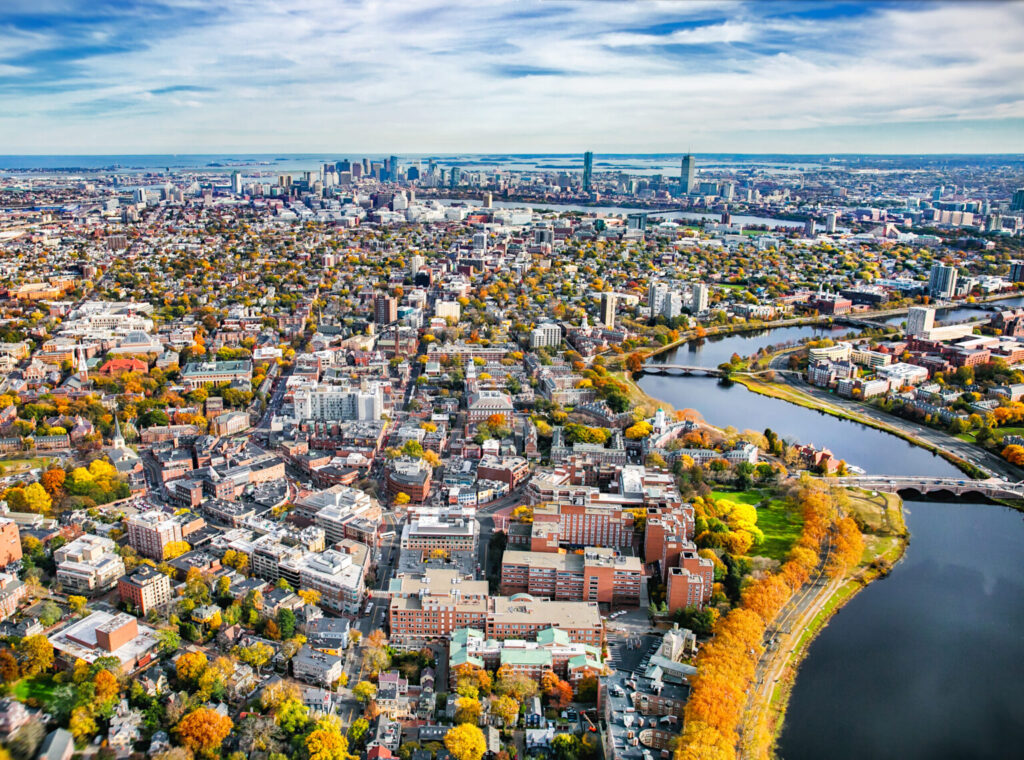
So Mayor Wu’s address was Roslindale, but her mission was to take this sprawling, small city and see if she could help save it from ecological and economic destruction.
On the record, she was optimistic. “My vision for Boston is that we should be the greenest city in America, a city for everyone where families can thrive,” she said.
In addition to the storm clouds of environmental issues, her other primary interests have been clear: improve the school system and public transportation and create affordable housing. Rents have ballooned and the average price for a house is $1 million.
The fact that the needs of the business community are not mentioned high on her to-do list has irritated that gang. In the old days, they met at the Vault and then whispered the mayor’s ear. Recent years didn’t require whisper from a vault. A simple phone call seemed to do the trick with the guys who formed the post-vault generation of businessmen.
Mayor Wu shows no interest in that sort of arrangement, which infuriates the local titans of commerce. She hasn’t been resistant to listening to these czars of business, but neither has she given any special favors.
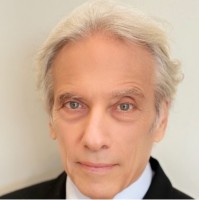
David D’Alessandro, former chief executive of John Hancock Financial Services, put it bluntly: “The mayor doesn’t want to be our friend or give us priority access to her. She doesn’t want to share a steak with us at Smith & Wollensky or have ‘one on one’meetings and doesn’t depend on our campaign contributions for reelection.”
The boys of business have their boxers in a bunch because the mayor hasn’t bowed and scraped before them. D’Allessandro, who evinces surprising support for the mayor, admired her moxie in the face of an increasingly belligerent bunch of businessmen. “We see ourselves as masters of the universe and are not used to nor do we react well to being dissed,” he said. “We are acting like hurt high school suitors rejected for a prom date.”
D’Alessandro is a rare voice from the business establishment supporting Mayor Wu. He reports getting a call from a business-community colleague. After hello, the caller didn’t take a breath before saying, “She’s got to go.” D’Alessandro knew who she was without asking. It was a call soliciting D’Alessandro’s money and support for a pro- business anti-Wu mayoral candidate. He took a pass.
The business community had enjoyed decades of special access to a parade of mayors, until this one. The days of entitlement were in the rearview. In an open letter to his fellow gods of business, D’Allessandro wrote: “We need to get over this pique and embrace Wu’s new paradigm, accept our altered role, and play by her new rules.”
Anti-Wu candidates were being put forward by the business czars before she was even halfway through her first term. This did not faze her. To cow-tow to special interests, especially business leaders, was not in her DNA. What was good for business was frequently bad for the environment, and this was a matter of life and death for the city all parties professed to love.
So she kept the business leaders at bay. She wanted to change the archetype, hoping that her work would prove that “corrupt politician” would no longer be considered a redundancy. Mayor Wu was playing the long game.